The B.Sc. Computer Science and Machine Learning program at Loyola Academy was established in the academic year 2023–24 with the aim of preparing students for the rapidly evolving field of Artificial Intelligence and Machine Learning, which is transforming industries worldwide. Machine Learning serves as the core foundation for becoming an AI Engineer, as it enables machines to learn from data, recognize patterns, and make intelligent decisions. The program emphasizes strong foundations in Statistics, Mathematics, and essential programming languages, enabling students to develop analytical and problem-solving skills required to build intelligent, data-driven systems.
The department regularly organizes seminars, workshops, and technical sessions to strengthen students’ practical knowledge and industry exposure. Students are also encouraged to participate in hackathons, coding competitions, and innovative projects to enhance their technical and creative abilities. With a focus on skill development and career readiness, the department strives to nurture competent professionals capable of meeting the demands of the AI-driven future.
VISION:
Our goal is to become a renowned global hub by providing outstanding education in the field of Artificial Intelligence and Machine Learning, thereby pushing our society to achieve new and innovative heights.
MISSION:
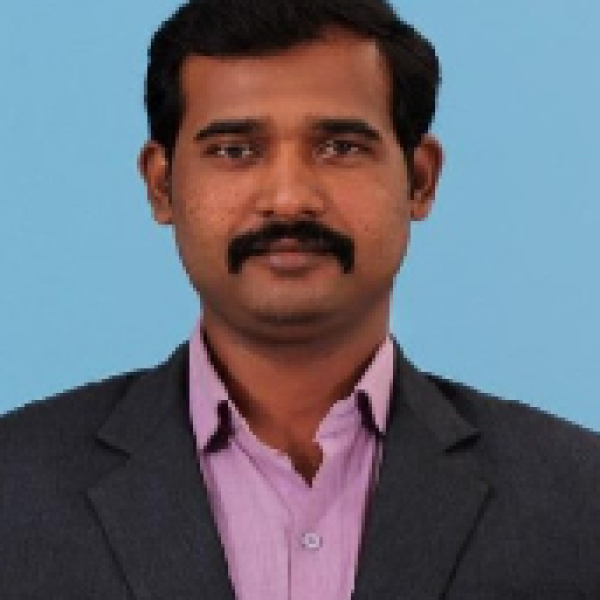
Assistant Professor & HOD
Assistant Professor
Assistant Professor
Assistant Professor
Assistant Professor
PO1. Scientific Knowledge: Apply the knowledge of Science, Mathematics, Engineering & Technology fundamentals to solve the complex problems.
PO2. Design/development of solutions: Design solutions for complex engineering problems and design system components or processes that meet the specified needs with appropriate consideration for the public health and safety, and the cultural, societal, and environmental considerations.
PO3.Problem analysis: Identify, formulate, research literature, and analyze complex scientific problems reaching substantiated conclusions using first principles of mathematics, natural sciences, and engineering sciences.
PO4. Modern tool usage: Create, select and apply appropriate techniques, resources, modern technology and IT tools to complex science and technological activities.
PO5. Environment and sustainability: Understand the impact of professional science and technological solutions in societal and environmental contexts and for sustainable development.
PO6.Individual and team work: Function objectively as an individual and as a member in diverse teams.
PO7. Communication: Communicate effectively on complex science & technology activities with society at large and able to write effective reports and documentation.
PO8. Life-long learning: Recognize the need and ability to engage in independent and lifelong learning in the context of technological change.
PROGRAM SPECIFIC OUTCOMES
PSO1: Appreciate the underlying mathematical relationships within and across Machine Learning algorithms and the paradigms of supervised and unsupervised learning.
PSO2: Be able to design and implement various machine learning algorithms in a range of real –world applications.
PSO3: implement problem solving skills in the broad area of programming concepts and manage different projects in interdisciplinary field. Ability to understand and adapt to the contemporary trends and best practices of industry and research standards.
PSO4:Ability to design and implement ethical sustainable solutions with a cutting-edge combination of Artificial Intelligence, Machine Learning, Natural Language Processing etc.
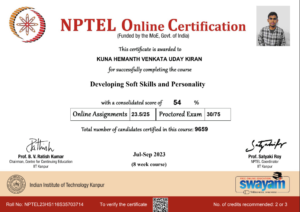
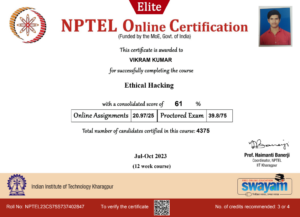
Students are encouraged to update their skills and prepare themselves for industry by equipping new knowledge and technologies through certificate and MOOCs program. In the Academic year 2023 – 24, two students completed NPTEL program.
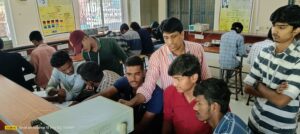
The first-year students of B. Sc. Computer Science & Machine Learning (ACSML) attended BSNL, Regional Telecom Training Centre,located at Erragadda on 3 February 2024,Saturday with the faculty in charge Ms. B. Kavya.
REPORT ON INDUSTRIAL VISIT 2022-23
Students are encouraged to take up the internship programme both on online and offline modes.Internships helps them to expand their knowledge and have exposure to the working environment.In the academic year 2023 – 24, two students completed internship program.
Departmental report for the academic year 2023 – 24
FACULTY ACHIEVEMENTS


This will close in 0 seconds